A cancer diagnosis is life-altering, and the initial weeks following a biopsy or scan are often filled with confusion, urgency, and difficult choices. One of the single most consequential decisions you or a loved one will make is where to receive treatment.
While community hospitals are well-suited for general care, specialized comprehensive cancer centers offer dedicated disease-specific multidisciplinary teams, cutting-edge therapies like cellular immunotherapy, and access to novel clinical trials. Evaluating cancer centers requires knowing what distinguishes leading oncology programs, how modern immunotherapy is managed, and why obtaining an expert second opinion is a vital step.
1. Types of Oncology Settings: Community Clinics vs. Comprehensive Cancer Centers
Understanding where to seek care depends largely on the complexity, rarity, and stage of the cancer.
Community Oncology Clinics
- Best For: Standard-of-care treatments, routine chemotherapy infusions, and ongoing surveillance close to home.
- Advantages: Minimal travel time, familiar staff, easier scheduling, and strong local support systems.
- Limitations: Oncologists in community practices are often generalists who treat dozens of different cancer types. They may lack early access to breakthrough experimental protocols or subspecialized surgical expertise.
Academic & NCI-Designated Comprehensive Cancer Centers
In the United States, the National Cancer Institute (NCI) designates facilities that meet rigorous standards for transdisciplinary research and advanced patient care (comparable to apex tertiary institutes globally, such as Tata Memorial Centre in India or the Royal Marsden in the UK).
- Disease-Specific Subspecialization: Rather than a general oncologist, your case is led by specialists who treat exclusively one disease—such as gastrointestinal oncology, thoracic oncology, or hematologic malignancies.
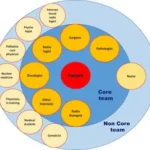
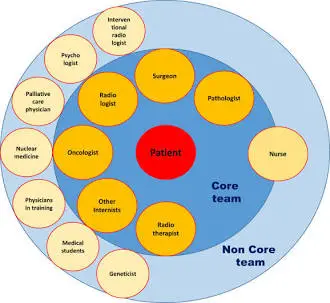
- Multidisciplinary Tumor Boards: Leading centers review complex cases in weekly meetings comprising surgical oncologists, medical oncologists, radiation oncologists, pathologists, geneticists, and radiologists to reach a consensus on the best treatment strategy.
- Translational Research: Direct integration with clinical research laboratories allows patients to access cutting-edge biomarker testing and clinical trials when standard lines of therapy fail.
2. Advanced Therapies: The Rise of Precision Oncology & Immunotherapy
Modern oncology has moved far beyond one-size-fits-all cytotoxic chemotherapy. Specialized centers excel in targeted biological treatments designed to train your immune system or attack precise genetic mutations.
Key Advanced Treatment Modalities
- Immune Checkpoint Inhibitors (ICIs): Drugs (such as PD-1/PD-L1 and CTLA-4 blockers) that remove the “brakes” from your immune system, allowing T-cells to recognize and attack tumor cells.
- CAR T-Cell Therapy (Chimeric Antigen Receptor): A complex cellular immunotherapy where a patient’s own T-cells are harvested, genetically re-engineered in a lab to target cancer cell antigens (such as CD19 or BCMA), and infused back into the patient.
- Next-Generation Sequencing (NGS) & Liquid Biopsy: Advanced molecular profiling that checks for specific genomic alterations (e.g., EGFR, ALK, KRAS, BRCA, MSI-High) to match patients with tailored targeted pills or antibody-drug conjugates (ADCs).
Why the Center’s Expertise Matters for Immunotherapy
Immunotherapy can lead to profound, durable remissions, but it also carries unique risks known as immune-related adverse events (irAEs)—such as pneumonitis, colitis, hepatitis, or myocarditis. Specialized oncology centers have established protocols and cross-departmental teams (including onco-cardiology and onco-pulmonology) to detect and manage these toxicities before they become life-threatening.
3. The Critical Importance of a Second Opinion
Many patients hesitate to seek a second opinion out of fear of offending their primary oncologist or losing precious time. In oncology, a second opinion is standard medical protocol, and any reputable oncologist will actively encourage it.
Why You Should Seek a Second Opinion
- Pathology and Staging Verification: Studies show that expert secondary pathology reviews lead to a change in diagnosis or tumor stage in up to 10%–15% of complex cases. An accurate initial diagnosis is essential to determine whether surgery, radiation, or systemic therapy comes first.
- Alternative Treatment Paradigms: An academic center might offer a minimally invasive robotic surgery or organ-sparing approach where a local clinic proposed a radical resection.
- Access to Phase I/II Clinical Trials: If a cancer has recurred or lacks standard curative options, an academic center can screen you for active trials evaluating next-generation therapies.
When to Seek One
- Immediately following the initial biopsy and staging scans, before beginning any invasive procedure or toxic chemotherapy regimen.
- If the cancer is rare, aggressive, or has an ambiguous primary site.
- If treatment stops working, or disease progression occurs while on standard protocols.
Tip: Many top-tier cancer centers offer remote/virtual second opinion programs. You can securely send your pathology glass slides, digital radiology discs (DICOM files), and clinical notes to have their subspecialists review your records without traveling out of state.
4. Key Factors to Evaluate When Selecting a Cancer Center
Use this checklist when evaluating oncology clinics and hospital programs:
| Evaluation Criteria | Questions to Ask the Care Team |
|---|---|
| Case Volume & Experience | “How many patients with my exact tumor subtype and stage does your team treat each year?” (High surgical and clinical volume directly correlates with lower complication rates and improved survival). |
| Multidisciplinary Tumor Board | “Will my treatment plan be reviewed collectively by surgical, medical, and radiation specialists before starting?” |
| On-Site Clinical Trials | “Are there active phase II or III trials open for my stage, and is our center an active trial site?” |
| Comprehensive Supportive Care | “Do you have dedicated onco-nutritionists, palliative care specialists, pain management teams, and psychological counseling on staff?” |
| Financial Navigation & Pre-Authorization | “Does your clinic have financial navigators to handle insurance approvals for expensive immunotherapies and patient assistance programs (PAPs)?” |
Frequently Asked Questions (FAQs)
Will seeking a second opinion delay my cancer treatment dangerously?
In most cases, no. Most solid tumors take months or years to develop, and taking 1 to 2 weeks to confirm your pathology and secure a second opinion will not affect overall outcomes. Always check with your doctor if your condition is an acute emergency (such as acute leukemia or spinal cord compression), which requires immediate intervention.
How do I initiate a remote second opinion?
Contact the international or national patient intake office of an academic cancer center. Their intake coordinators will request a release form allowing your current hospital to transmit your electronic medical records, digital imaging files, and physical pathology biopsy tissue blocks/slides directly to their laboratory for re-evaluation.
Does health insurance cover second opinions and immunotherapy?
Most major commercial health plans and Medicare cover second opinions at in-network specialized cancer facilities. For immunotherapy, coverage depends on FDA approvals or National Comprehensive Cancer Network (NCCN) Compendium guidelines for your specific biomarker and stage. Because these drugs can exceed $15,000 per dose, centers must secure insurance prior authorization before administering treatment.
Can I get a second opinion from a top center and receive the treatment locally?
Yes. This model—called shared care or co-management—is common. A specialized academic center designs your overall treatment strategy and oversees major surgeries or complex therapies, while your local community oncologist administers standard bi-weekly infusions or monitoring scans, saving you excessive travel.