Waking up with sudden, distressing symptoms often forces an immediate decision: should you open a virtual care app on your phone, drive to an urgent care walk-in clinic, or head straight to the nearest Emergency Room (ER)?
Choosing the wrong care setting can result in dangerous treatment delays for true medical emergencies—or saddle you with thousands of dollars in surprise facility bills for minor ailments that could have been resolved from your sofa.
Understanding the clinical boundaries, financial differences, and triage protocols between Telehealth / Virtual Urgent Care, In-Person Urgent Care, and the Emergency Department (ED) is essential to getting the right care at the right cost.
1. The Three Tiers of Acute Care
Medical issues fall into three operational categories based on symptom acuity and diagnostic needs:
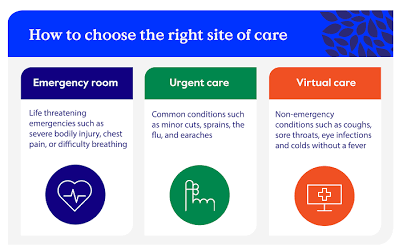
1. Low Acuity (Conversational / Visual)   ➔   Telehealth & Virtual Urgent Care
2. Moderate Acuity (Hands-on / Point-of-Care Diagnostics) ➔   Walk-in Urgent Care Clinic
3. High Acuity (Life-, Limb-, or Organ-Threatening)      ➔   Hospital Emergency Room (or 911)
| Factor | Virtual Urgent Care / Telehealth | In-Person Walk-in Urgent Care | Hospital Emergency Room (ER) |
| Primary Scope | Minor illnesses, visual dermatologic issues, simple refills, non-controlled scripts. | Non-life-threatening conditions requiring physical exam, X-ray, or minor procedures. | Immediate life-, limb-, or vision-threatening trauma, systemic failure, chest pain. |
| Diagnostic Tools | Video/audio inspection, patient-reported vitals, digital photos. | Point-of-care rapid swabs (Strep, Flu, COVID), urine dipsticks, basic X-rays, ECG. | CT/MRI scans, ultrasound, full emergent blood labs, invasive cardiac catheterization. |
| Typical Wait Time | Under 15 minutes. | 20 to 60 minutes. | 1 to 4+ hours (triaged strictly by medical acuity). |
| Average Cost (Out-of-Pocket) | $0 – $75 (often a low specialist copay or flat cash fee). | $50 – $200 (standard urgent care copay). | $1,000 – $3,000+ (triggers high deductible, coinsurance, and facility fees). |
2. When to Use Virtual Urgent Care / Telehealth
Virtual urgent care connects you with a board-certified physician, physician associate, or nurse practitioner through a secure video link or asynchronous chat. It is ideal when a diagnosis can be safely established through medical history, symptom dialogue, and visual examination.
Appropriate Virtual Care Conditions
- Upper Respiratory Symptoms: Mild cold, flu-like symptoms, sinus congestion, seasonal allergies, or mild COVID-19 without shortness of breath.
- Dermatology & Rashes: Mild hives, contact dermatitis (poison ivy), superficial insect bites, eczema flares, minor sunburns, or cold sores (high-resolution photos assist diagnostic accuracy).
- Eye & Throat Infections: Uncomplicated conjunctivitis (“pink eye” without vision loss or severe ocular pain) and mild pharyngitis.
- Urinary Tract Infections (UTIs): Straightforward, non-recurrent cystitis in non-pregnant adult females without back pain, flank pain, or high fever.
- Routine Prescription Refills: Short-term bridge refills (30 days) for non-controlled maintenance medications (e.g., blood pressure, thyroid, asthma inhalers) when between regular primary care appointments.
- Stomach Upsets: Mild nausea, diarrhea, or acid reflux where you are able to keep fluids down and do not show signs of severe dehydration.
Limitations of Virtual Visits
A telehealth provider cannot listen to your heart with an acoustic stethoscope, palpate an abdomen for peritoneal rebound tenderness, or run an onsite lab swab. Furthermore, federal and state regulations generally bar telehealth providers from prescribing DEA-controlled substances (such as schedule II stimulants, narcotics, or strong benzodiazepines) during on-demand urgent care encounters.
3. When an In-Person Urgent Care Clinic Is Necessary
If your condition is non-life-threatening but requires a physical intervention or hands-on clinical verification, an in-person urgent care center bridges the gap between telehealth and the ER:
- Suspected Fractures or Deep Sprains: Requires an in-person physical assessment and on-site plain radiography (X-ray) to rule out broken bones and apply splints or boots.
- Lacerations & Deep Cuts: Wounds requiring surgical glue, skin staples, or sutures to close, or those needing a tetanus shot booster.
- Severe Sore Throat with Swollen Tonsils: Needs a rapid physical strep swab or mono test to confirm bacterial etiology before prescribing antibiotics.
- Persistent Vomiting & Mild Dehydration: Requires intramuscular antiemetics or an intravenous (IV) saline infusion line.
- Ear Pain: Requires otoscopic visualization of the tympanic membrane to differentiate middle ear infections (otitis media) from outer canal infections (swimmer’s ear).
4. Red Flag Symptoms: When to Go Straight to the Emergency Room (or Call 911)
The Emergency Room is configured for diagnostic crisis management and immediate resuscitation. Attempting to resolve the following red flag symptoms via a telehealth call wastes critical minutes where tissue or brain function is at risk:
- Cardiovascular & Respiratory Emergencies:
- Sudden chest pressure, radiating pain to the jaw/left arm, or sudden unexplained shortness of breath.
- Severe difficulty breathing, bluing lips, or asthma attacks that fail to respond to rescue inhalers.
- Neurological Signs (Immediate Stroke or Hemorrhage):
- Facial drooping, one-sided arm weakness, or slurred speech (the F.A.S.T. protocol).
- Sudden, explosive “thunderclap” headache (the worst headache of your life).
- Loss of consciousness, sudden vision loss, unprovoked seizures, or acute confusion.
- Acute Trauma & Hemorrhage:
- Uncontrolled bleeding that does not stop after 10 minutes of direct, firm pressure.
- Significant head trauma accompanied by loss of consciousness, nausea, or vomiting.
- Obvious compound bone fractures (bone piercing through the skin).
- Severe Abdominal or Systemic Pain:
- Acute, unbearable lower-right abdominal pain (possible appendicitis) or rigid, tender abdomen.
- Severe anaphylaxis symptoms: swelling of the lips, tongue, or throat, dizziness, and difficulty swallowing following allergen exposure.
- High fever accompanied by a stiff neck, petechial rash, or extreme lethargy.
Frequently Asked Questions (FAQs)
Can a telehealth doctor send me to the ER if they see something wrong?
Yes. Clinical triage is a core part of virtual urgent care. If an online doctor notices respiratory distress, altered mental state, or suspicious vital signs during the video visit, they will advise you to disconnect and seek emergency care or dial emergency dispatch (911) immediately.
What happens if I go to the ER for a minor condition that could have been handled virtually?
The Emergency Room must medically evaluate and stabilize you regardless of your condition under federal EMTALA regulations. However, non-emergency cases are triaged to the bottom of the priority line, meaning you may wait 4 to 8 hours while emergent cases are prioritized. Furthermore, your insurance will still bill the high emergency facility fee, copay, or deductible, making it a very costly visit.
Are online prescription services allowed to prescribe antibiotics?
Yes, licensed telehealth clinicians can prescribe standard non-controlled antibiotics (e.g., amoxicillin, cephalexin, nitrofurantoin, azithromycin) when clinically justified based on clear symptom patterns and national clinical guidelines. However, responsible platforms practice strict antibiotic stewardship and will decline antibiotic requests for uncomplicated viral conditions like common colds or acute bronchitis.
Does health insurance cover telehealth appointments?
Most major commercial health insurance plans, Medicare Advantage, and Medicaid cover virtual urgent care visits. In many plans, virtual visits have lower copays ($0 to $25) compared to in-person clinics. Even for uninsured self-pay patients, virtual urgent care visits typically range from $40 to $80—a fraction of the $150+ walk-in clinic charge or the $1,500+ ER invoice.