Receiving an exorbitant hospital bill after an illness or surgery is overwhelming, but paying the initial amount requested without question is often a costly mistake. Medical billing studies consistently show that a significant percentage of hospital bills contain administrative or clinical coding errors. From duplicate medications to services never rendered, billing discrepancies add billions of dollars to patient debt each year.
Taking control of medical expenses requires an understanding of how hospitals code services, how to audit an account, and how to negotiate unfair charges down to manageable numbers.
Common Hospital Billing Errors to Watch For
Hospital invoices pass through multiple departments—triage, pharmacy, surgery, nursing, and revenue cycle management—creating abundant opportunities for errors:
- Duplicate Charges: Being billed multiple times for the same service, such as receiving two line items for a single CT scan or daily administration of standard medications.
- Unbundling: Medical codes are often designed to package related services together under a single rate (e.g., standard surgical prep, supplies, and sutures). Some billing departments unbundle these services, listing each component separately under different codes to maximize total reimbursement.
- Upcoding: Billing for a higher or more complex level of service than what was delivered (e.g., billing a routine 15-minute consultation as an extended critical care visit).
- Operating Room & Anesthesia Overcharges: Charging for scheduled time rather than actual elapsed procedure time. A patient scheduled for two hours who only spends 45 minutes in the operating suite should be billed strictly for the 45 minutes of surgical facility time.
- Mismatched Observation vs. Inpatient Status: Being billed as an inpatient when chart notes list an observation stay, or vice versa, causing insurance denials and unexpected out-of-pocket facility costs.
- Charges for Canceled or Refused Care: Items such as prescribed medications, physical therapy sessions, or diagnostic tests that the doctor ordered but later canceled—or that the patient refused—frequently linger on final invoices.
Phase 1: Gathering the Records (Do Not Pay Yet)
Before making any payment, freeze the account and secure the primary records required to conduct a thorough audit.
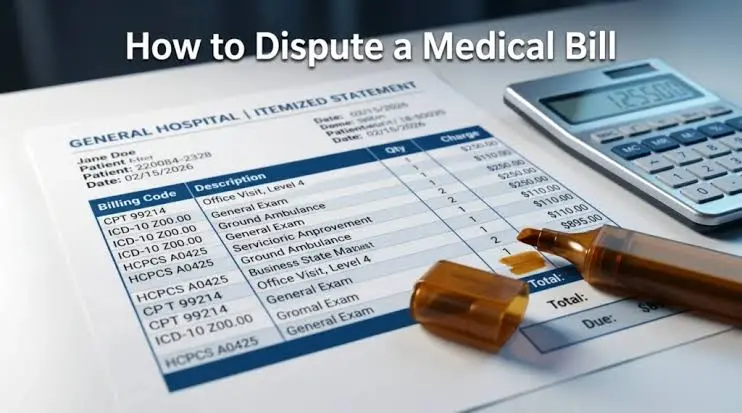
- Request an Itemized Bill with Billing Codes: Standard hospital bills display summary categories (e.g., “Pharmacy: $4,200”, “Lab: $1,800”). Call the hospital billing department immediately and demand a comprehensive, itemized bill that includes:
- CPT (Current Procedural Terminology) codes or HCPCS codes
- Revenue codes
- Units charged
- National Drug Codes (NDC) for administered medications
- Obtain the Insurance Explanation of Benefits (EOB): Do not treat a hospital bill as an official bill until you compare it against the EOB from your insurance carrier. The EOB verifies:
- What the hospital billed
- The negotiated in-network discount
- What insurance paid
- The actual patient responsibility (deductible, copay, or coinsurance)
- Request Your Complete Medical Record: Under medical privacy regulations, patients have the legal right to inspect and receive copies of their medical records. Request the physician notes, nurse flow sheets, operating room logs, and medication administration records (MAR). These documents serve as proof of what care was actually delivered.
Phase 2: Conducting the Audit
Once documents are in hand, line up the itemized bill, the EOB, and the medical records side by side.
| Checkpoint | What to Look For | Corrective Action |
| Medication Administration Records (MAR) | Cross-reference every listed pill or IV bag on the bill with the nursing time-stamp log. | Highlight any drug billed that lacks an administration entry in the chart. |
| Time-Based Charges | Compare the surgical suite start and stop times recorded by the anesthesiologist against the billed units. | Request a recalculation if the bill rounds up significantly or bills scheduled rather than actual time. |
| Routine Consumables | Look for exorbitant fees for everyday items (gloves, basic sterile gauze, generic over-the-counter pain relievers). | Challenge excessive facility charges that should be bundled into room and board. |
| Coding Accuracy | Input billed CPT codes into free medical billing code lookup engines or consumer pricing databases. | Flag discrepancies between procedural descriptions in physician notes and billed complexity. |
Phase 3: The Dispute Process
If clear discrepancies, unbundled codes, or services not rendered appear on the statement, initiate a formal dispute:
- Place the Account on Administrative Hold: Contact the hospital’s patient accounts department. Inform them that the bill is under active formal audit and request that the account be marked as “Disputed” to pause late fees and prevent transmission to third-party collections agencies. Note down the representative’s name, call date, and reference ID.
- Draft a Formal Dispute Letter: Submit your dispute in writing via certified mail or secure patient portal. Structure the communication clearly:
- Patient name, account number, date of service, and statement number
- Specific itemized line numbers and CPT codes contested
- Evidence from medical records showing why the charge is inaccurate
- A request for an amended invoice within 30 calendar days
- Notify Your Insurer: If an error involves duplicate billing or upcoding on an insurance claim, notify your insurer’s fraud and abuse or claims review department. Insurers have dedicated recovery units that will demand audits from the hospital to avoid overpaying claims.
Phase 4: Negotiating the Remaining Balance
Even after errors are removed, remaining valid out-of-pocket charges can still be unaffordable. Use these strategies to settle the remaining balance:
1. Apply for Financial Assistance / Charity Care
Under federal non-profit guidelines, all tax-exempt non-profit hospitals are legally required to offer a Financial Assistance Policy (FAP).
- Eligibility thresholds often extend to households earning 200% to 400% of the Federal Poverty Level.
- Qualified applicants can have 50% to 100% of their bills completely forgiven.
- Ask the billing office directly for the charity care application or locate it on the hospital’s official financial assistance webpage.
2. Leverage Fair Market Pricing (Reference-Based Pricing)
Uninsured or out-of-network patients are routinely billed “chargemaster” rates—artificially inflated sticker prices that commercial insurers never pay.
- Look up local average prices for your procedures using public healthcare price transparency tools and the Medicare allowable rate.
- Inform the billing manager that you are prepared to pay the Medicare rate plus 10%–20%, or the average commercial negotiated rate in your zip code, as a complete settlement.
3. Propose a Lump-Sum Cash Settlement
Hospitals frequently sell delinquent debt to collection agencies for pennies on the dollar. If you have access to some immediate funds, offer a one-time, immediate cash payment to clear the account.
- A realistic initial offer is 30% to 50% of the outstanding valid balance.
- If the hospital agrees, always obtain a signed settlement agreement in writing stating the account is paid in full before transferring any funds.
4. Set Up a Zero-Interest Payment Plan
If charity care is denied and a lump-sum discount is unfeasible, request an extended interest-free installment plan. Most hospital systems will spread payments over 12 to 36 months without interest charges, provided you make regular minimum payments.
Summary Action Checklist
- [ ] Request a comprehensive itemized bill with CPT and revenue codes.
- [ ] Match the itemized charges line-by-line against your insurance EOB.
- [ ] Request your medical records (physician notes, operative logs, MAR).
- [ ] Call billing to put the account on administrative hold.
- [ ] Submit a written dispute letter for duplicates, unbundled items, or unrendered care.
- [ ] Screen for hospital charity care guidelines before settling.
- [ ] Offer a cash settlement or negotiate down to local fair market/Medicare rates.
- [ ] Obtain all settlement agreements and receipts in writing before payment.